
- Solar-powered
- Off-grid
- Modular
Turn Seawater into Life.
Solar-powered water technology for places beyond conventional water infrastructure.
HelioVap is a water technology company developing solar-powered desalination solutions for communities, industries and operations where reliable water infrastructure is difficult to access.
- Stage
- Engineering validation
- Location
- Hong Kong
- Laboratory evaporation rate
- 28 L·m⁻²·day⁻¹
Water. Where Infrastructure Can't Reach.
HelioVap combines solar energy, advanced porous materials and modular system design to rethink how freshwater can be produced outside conventional infrastructure.
- 01
Solar Energy
Harness abundant sunlight as the primary energy source. Evaporation is driven by daylight rather than by a grid connection or a generator.
- 02
Advanced Materials
Engineered porous materials enable efficient solar-driven evaporation. The material is where the energy is captured and where the heat is held.
- 03
Distributed Production
Move water production closer to where freshwater is needed, instead of moving water to it from a centralised plant.
- 04
Modular Deployment
Adapt system capacity to different environments and water-demand requirements. A larger site is a larger array, not a different product.
Freshwater should not depend on being connected to the grid.
HelioVap is developing simple, solar-powered water solutions that make freshwater more accessible in places where conventional water and energy infrastructure is limited, unreliable or unavailable.
We aim to transform abundant sunlight and seawater into a distributed source of freshwater, bringing water production closer to where it is needed.
Our Vision
A future where access to freshwater is not limited by infrastructure.

Turning Sunlight into Freshwater
At the core of HelioVap is a proprietary solar evaporation platform designed to convert sunlight into localized heat for efficient water evaporation. Rather than heating the entire body of water, our approach concentrates solar energy at the water and air interface, where evaporation occurs.
- 01
Capture Sunlight
Photothermal absorption
Our proprietary photothermal material absorbs incoming sunlight and efficiently converts it into heat.
- 02
Localize Heat
Heat at the interface
The material concentrates heat at the evaporation interface, reducing unnecessary heating of the underlying water.
- 03
Supply Water
Continuous transport
Its interconnected porous structure enables continuous water transport to the evaporation surface.
- 04
Manage Salt
Stable operation
The system architecture is designed to maintain water supply while mitigating salt accumulation at the evaporation interface.
- 05
Recover Freshwater
Condensation and collection
Water vapor is directed toward a cooler condensation surface, where it condenses into freshwater for collection.

under simulated 1-sun illumination
Laboratory evaporation performance. System-level freshwater recovery depends on system design, operating conditions, condensation and water recovery efficiency.
The measured figure is 2.8 kg·m⁻²·h⁻¹ at the evaporating surface. The daily figure is that rate over ten hours of illumination, not a measurement of a full day.
Why conventional desalination does not fit every location.
None of this is a criticism of reverse osmosis or of large thermal plant. Both are efficient at scale, where power is reliable and technicians are reachable. The difficulty is what happens at the other end of the range.
- Energy intensive
- Many conventional systems require significant and continuous electrical or thermal energy, together with high pressure equipment to use it.
- Infrastructure heavy
- They are designed around centralised water and power networks, which is difficult to justify for small and distributed demand.
- Difficult to deploy
- Large systems are not always practical for remote, temporary or moving sites, where the maintenance burden decides the outcome.
HelioVap is designed to address this gap.
Where each one belongs
Conventional desalination
- Centralised
- High capacity
- Infrastructure connected
- Continuous power and pressure
- Specialist maintenance
HelioVap
- Distributed
- Modular capacity
- Infrastructure independent
- Sunlight at ambient pressure
- Serviceable on site
Where HelioVap Can Make a Difference
Our technology is being developed for applications where freshwater access, energy availability and infrastructure are closely connected.
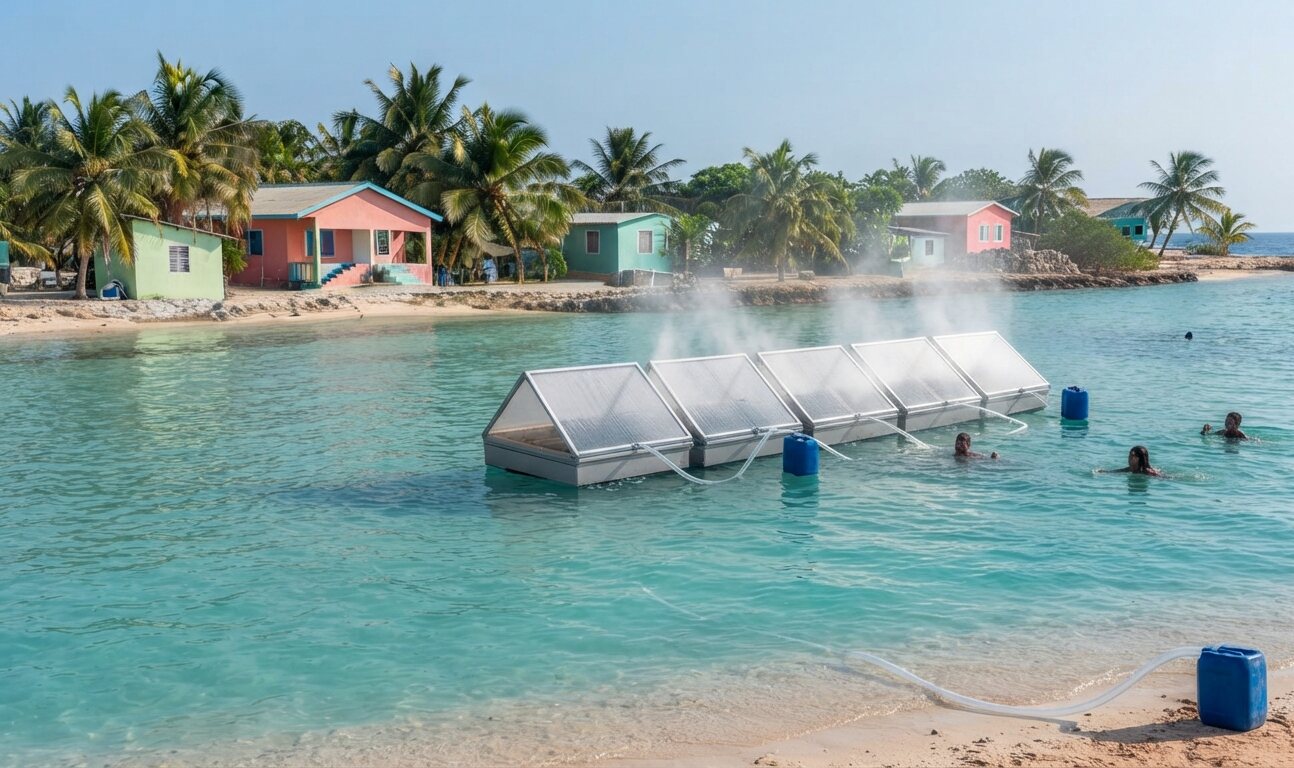
Remote Islands
Distributed freshwater production for communities and facilities with limited access to centralized water infrastructure.
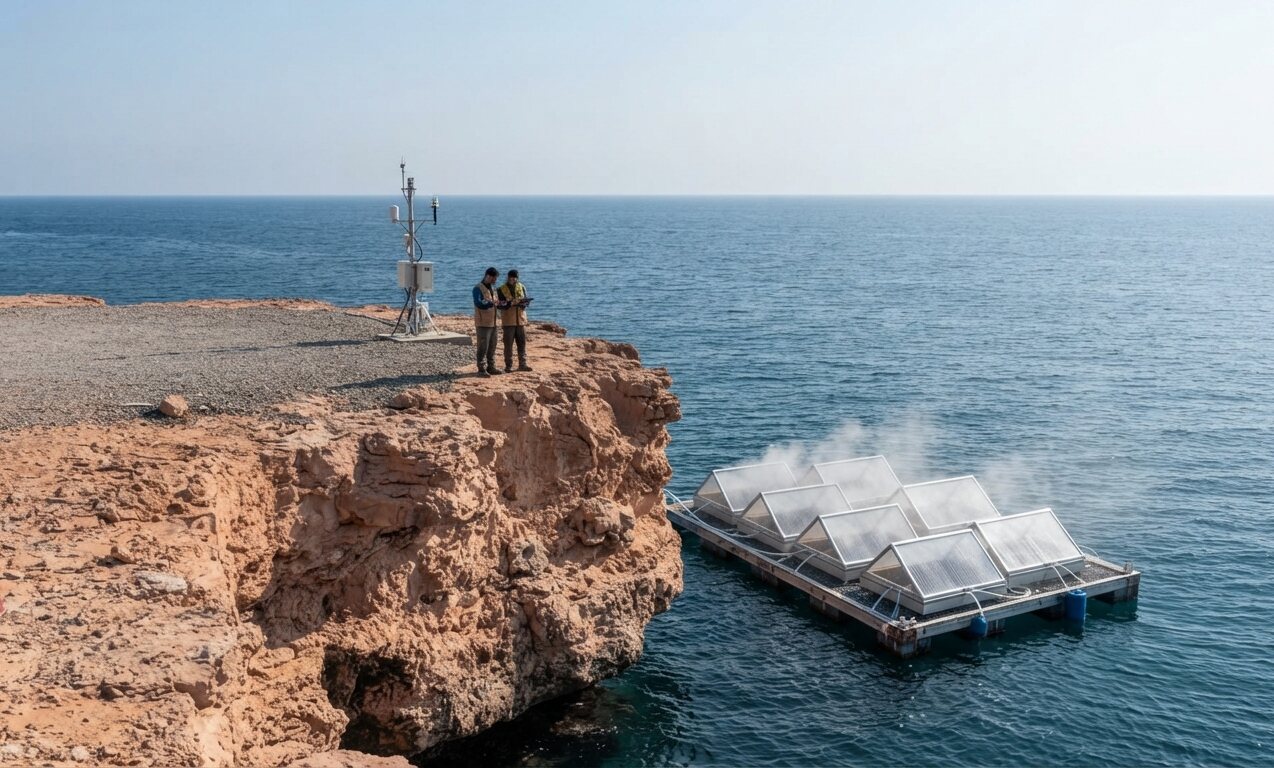
Coastal Communities
Solar-powered desalination for locations with access to seawater but limited freshwater resources.
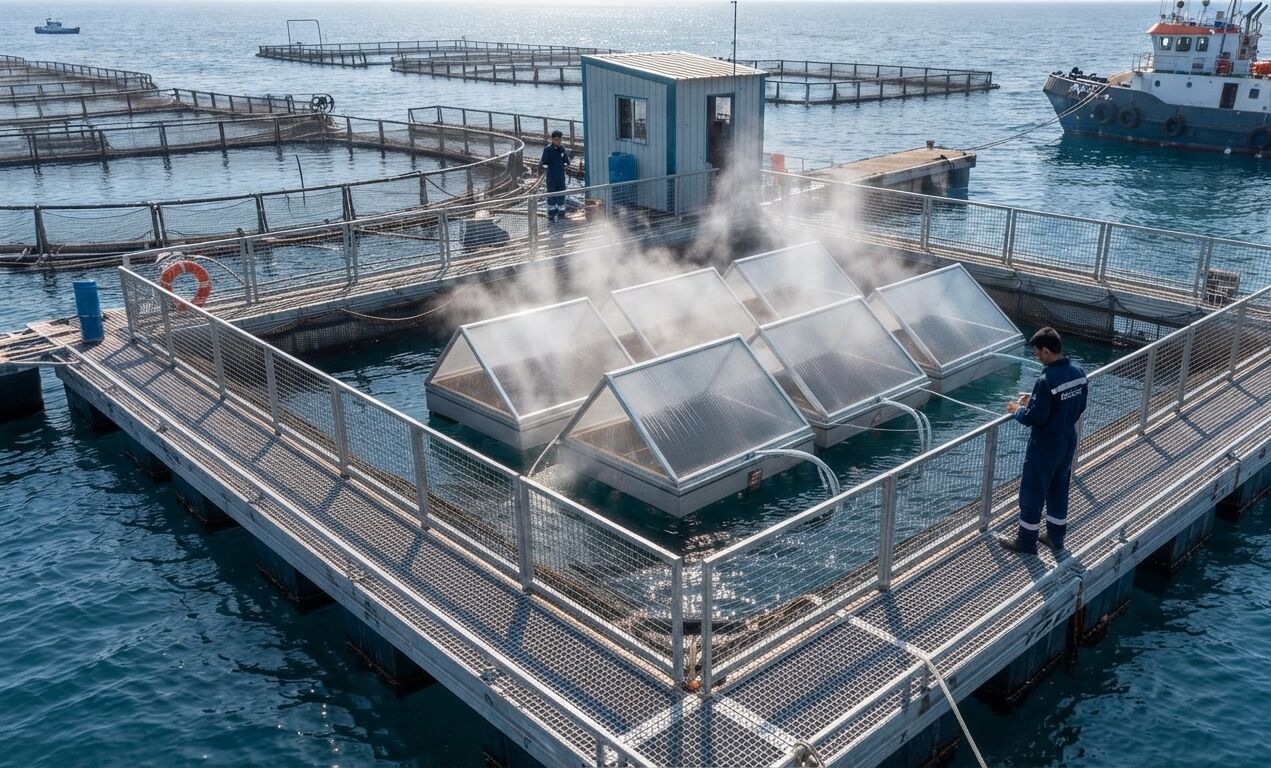
Marine & Offshore Operations
Potential applications in vessels, offshore facilities and other environments where freshwater production and energy efficiency are critical.
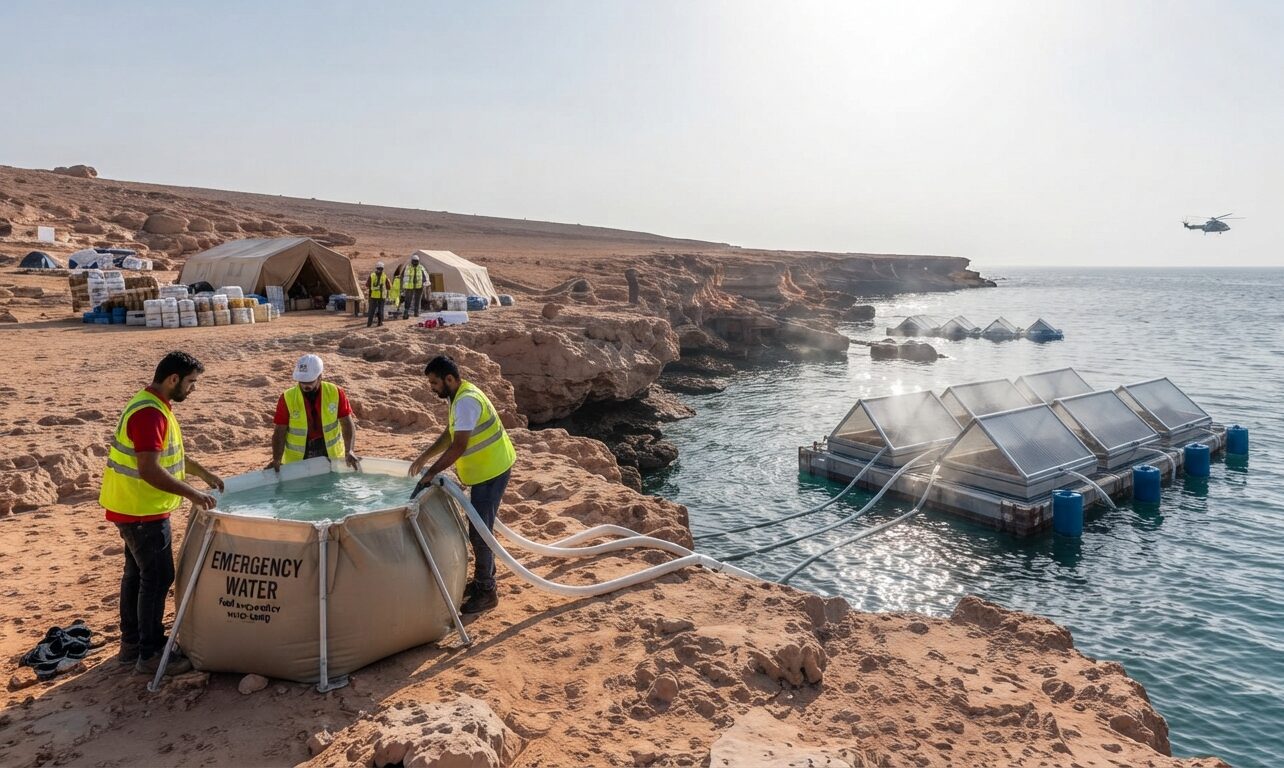
Emergency Response
Rapidly deployable water-production systems for situations where conventional water infrastructure has been disrupted.
- 05Concept visual
Off-Grid Locations
Decentralized freshwater generation for remote locations beyond reliable electricity and water networks.


Building a lighter path to freshwater.
We welcome pilot, engineering and deployment discussions for marine and off-grid environments.